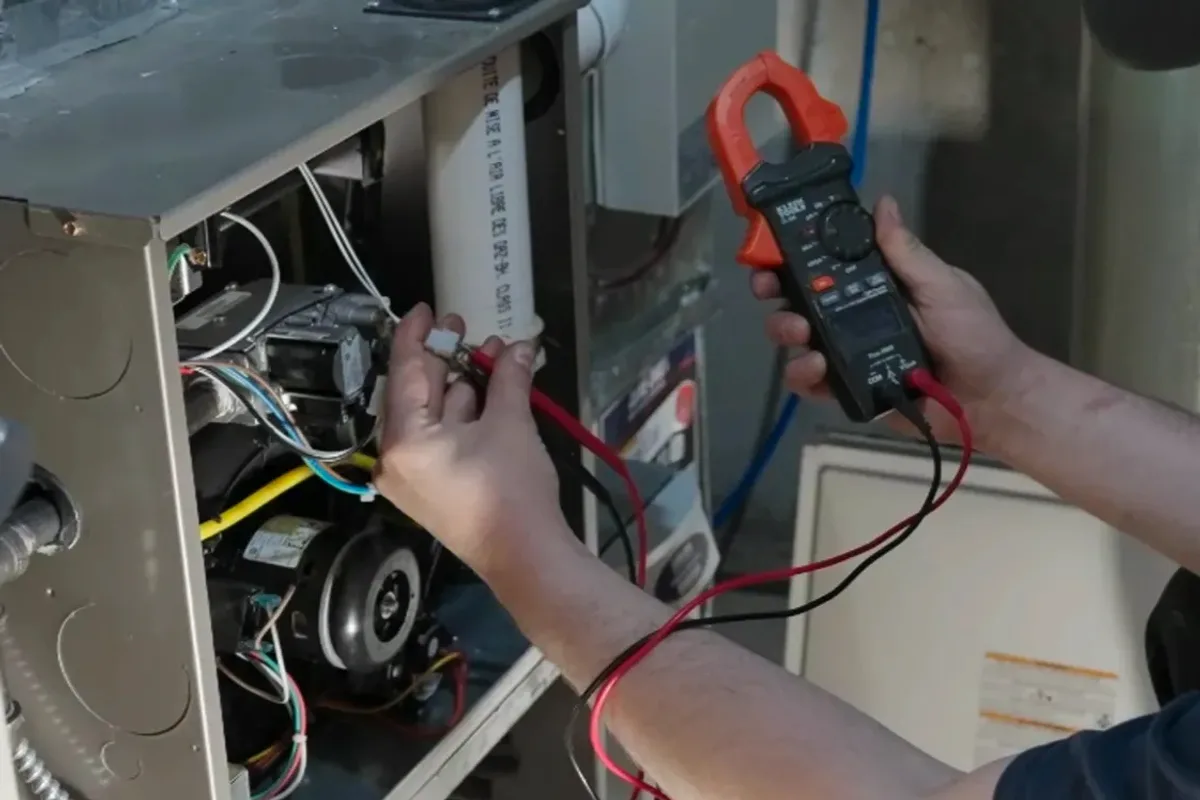
Request furnace repair for a property in Port Elgin. Include the equipment, the problem or planned work, and your location so the request can be reviewed.
What details help distinguish a furnace fault from a problem in a connected heat-pump system?
A furnace that will not start, stops before reaching the set temperature, or produces uneven heat needs diagnosis before parts are selected. The fault may involve ignition, a control, airflow, or another component, and the checks differ between propane and gas equipment. If a heat pump works alongside the furnace, its controls and operating sequence may also affect the symptoms. Record when the problem began, any displayed fault code, and recent service details to help define the investigation.
The assessment should identify the fuel, furnace model, fault codes, and sequence of events, then compare those observations with the unit's operating and service records. For a heat-pump combination, the control settings and which heating source was called on matter too. This helps separate a furnace ignition or control fault from an issue elsewhere in the heating sequence before repair or replacement is considered.
Propane and gas furnace fault diagnosis
Furnace controls and heat-pump coordination
Repair-history and replacement assessment
Assessment and Scope
Questions for the Proposed Work
01
Separate furnace symptoms from system symptoms
A propane or gas furnace that fails to ignite calls for a different diagnostic path than one that starts but cannot maintain operation. The model, displayed fault information, and conditions when the fault occurs help narrow the checks. Where a heat pump is also installed, note whether the symptom occurs with one or both heating sources; their controls may share the call for heat without sharing the same fault.
02
Use the fault and service history
A clear description of unusual sounds, cycling, or changes in heat delivery can help distinguish an intermittent control issue from a component failure. Existing service records and prior fault codes show whether the same problem has returned or whether a new symptom has appeared. That comparison matters because replacing a part without understanding a recurring fault may leave its underlying cause unresolved.
03
Compare repair with replacement
A repair decision depends on the confirmed fault, the condition of the furnace, parts availability, and its repair history, rather than age alone. A discrete fault on otherwise serviceable equipment can support a targeted repair. Repeated failures, extensive deterioration, or a major component problem may justify comparing replacement options. If the furnace works with a heat pump, confirm that any proposed replacement can coordinate with the existing controls.
Compare the next step
Give the contractor an occupant contact for observations and an owner contact for authorization. Ask how findings and approval requests will be recorded before repairs begin. Confirm access to the appliance and any service-agreement requirements so the person reporting no heat is not assumed to approve an unrelated replacement.
Leave burner, fuel, venting, electrical, and internal equipment work to a qualified contractor. Do not bypass a safety switch or repeatedly reset a furnace.